
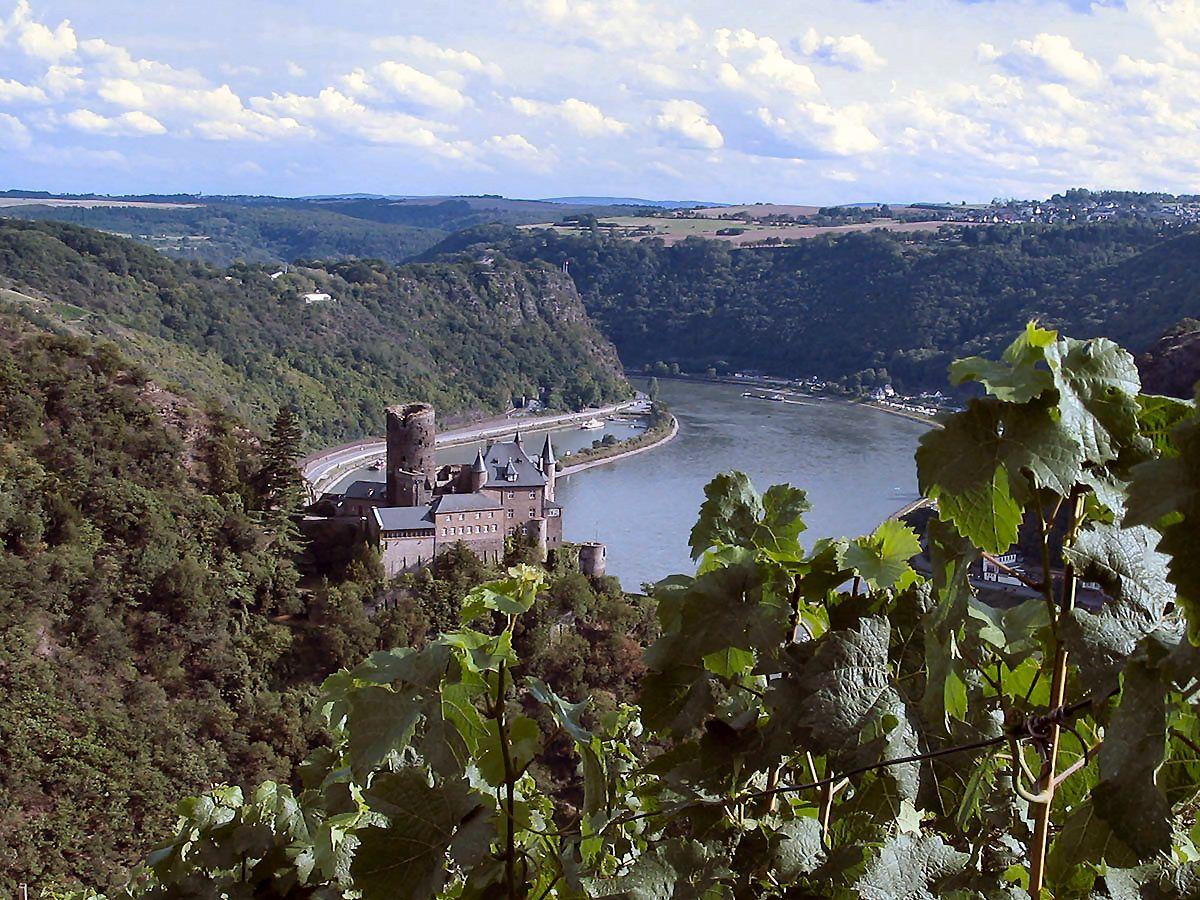
With a plan from Spain, France or Italy, your phone works in Germany just as it does at home: that is the EU's Roam Like at Home. But the country has two surprises for travellers. The first is that such a large, wealthy country still has stretches without coverage, especially on trains and in the countryside. The second is that one of its nine neighbours, Switzerland, is outside that roaming area, and near Lake Constance or Basel your phone can connect to a Swiss network without warning.
This guide starts with what matters if something goes wrong (who to call and where your consulate is) and moves on to the practical side: what your phone does at the airport, on Deutsche Bahn trains, at the Christmas markets, at the Swiss border and in the Alps, and how to stay online for the whole trip.
Consular protection: if something goes wrong
Is Germany safe to visit right now?
The Telcomia Safety Index for Germany is 1.33/4 (Low risk, level 1 of 4) as of Nov 22, 2026. It is a composite of official advisories from Spain, the United Kingdom, the United States and Germany, recalculated daily.
155 diplomatic missions from 121 countries, across 16 cities.
Situation now·
Germany: Christmas markets, from late November
German Christmas markets open from late November 2026; according to an opening-dates guide, Heidelberg opens on 23 November, Dresden on 25 and Nuremberg on 27, and most close around 23-24 December. These are very crowded places. The UK (11 August) says terrorist attacks in Germany could be indiscriminate and affect public places such as markets, shopping centres, events and crowded places, and advises staying aware of your surroundings.
What governments advise
Note the exits and police instructions, do not stop at entrances, and look after your wallet and phone. The emergency number is 112.
What to do
- 1When you arrive, locate the exits and the more open areas of the market.
- 2Always follow police and security staff instructions.
- 3Look after your wallet and phone in the busiest areas.
- 4In an emergency, call 112.
- 5With a Telcomia eSIM for this trip, your embassy's details, the risk level and the emergency phrases with audio stay saved on your phone and open even without a connection.
Questions travellers are asking this week
Is it safe to travel to Germany right now?
Yes, Germany is open to travel. The US is at Level 2 (exercise increased caution) because of the terrorist threat, so at Christmas markets and other busy places stay alert and follow police instructions.
When do the German Christmas markets open?
According to the guide consulted, Heidelberg on 23 November, Dresden on 25 and Nuremberg on 27, with most closing on 23 or 24 December.
What does the UK say about the terrorist threat in Germany?
That attacks could be indiscriminate, including at markets and crowded places, and advises staying aware of your surroundings.
What is the emergency number?
112.
How the Telcomia app helps
- Your embassy and its emergency numbers, one tap away.
- An alert if the risk level rises during your trip.
- Everything saved on your phone to read offline.
- Emergency phrases in the local language, with audio.
- Mobile data from the moment you land, so alerts reach you.
Sources: travelpirates.com (Oct 28, 2026) · United Kingdom — Foreign Office (FCDO) (Aug 11, 2026)
A dated summary of official and press sources. It does not replace instructions from the local authorities or your embassy.
- Phone (from a mobile): 112, free of charge, is the number for the fire service and ambulances, and 110 is the police. For an urgent medical question that is not an emergency, when surgeries are closed, 116117 puts you through to the on-call doctor, free and 24 hours a day.
- If you cannot speak: nora, the official emergency app of the federal states, lets you ask for help in writing, but you have to register beforehand with a mobile number and confirm your identity. If you want it, install it and register before your trip, and check that it accepts your number.
- Your embassy: almost all are in Berlin, and many countries also have a consulate in Munich, Frankfurt, Hamburg, Düsseldorf or Stuttgart. The Telcomia app shows yours, with address and phone number, plus emergency phrases in German, with audio.
- If your country has no embassy or consulate in Germany and you are an EU citizen, the embassy of any other EU country must help you on the same terms as its own citizens (Article 23 of the Treaty on the Functioning of the EU).
- Lost or stolen passport or ID card: report it at any police station (Polizei) and keep the report, which your insurer and consulate will ask for. Your consulate can issue an emergency travel document. See which consulate handles your passport in the Germany travel-safety guide.
- Official alerts: Germany sends emergency alerts to phones by Cell Broadcast, with nothing to install: they reach compatible phones that are switched on and have coverage in the area. For more detail, the official NINA app gives civil-protection warnings for the place you choose, and the weather service (DWD) publishes storm, snow and flood warnings at dwd.de.
What governments say
Checked on 20 November 2026.
- The United States asks travellers to "exercise increased caution" in Germany (level 2 of 4) because of terrorism.
- The United Kingdom warns that terrorists are very likely to try to carry out attacks in Germany, and lists markets and cultural and sporting events among possible targets.
- Spain sets no restrictions on travel. It advises the usual caution, especially in large cities, tourist areas and main stations, and suggests carrying your passport as well, because of document theft.
Entering: documents and checks
- EU citizens: a valid national ID card or passport is enough. A digital ID on your phone, a driving licence or a health card are not valid travel documents.
- Checks at land borders: since September 2024 Germany has been checking all nine of its land borders, including those with Schengen countries, and the European Commission lists the checks until 15 March 2027. Keep your document to hand on trains and buses from France, Austria, Poland or the Netherlands too.
- Travellers from outside the EU: Schengen rules apply. Since October 2025 (at all borders since April 2026) the Entry/Exit System (EES) takes fingerprints and a photo on your first entry and replaces passport stamps. The ETIAS travel authorisation is not yet in operation: the EU will give several months' notice.
- Cash: if you arrive from outside the EU with 10,000 euros or more, you must declare it at customs.
The essentials
The European Commission sums it up like this: Roam Like at Home applies in EU countries, in the European Economic Area (Iceland, Liechtenstein and Norway) and in Moldova and Ukraine. Germany is included, so with an EU plan you call, text and use data at home prices, within your plan's fair-use limits.
In Germany it pays to have data from the moment you land. Your train ticket is in the DB Navigator app, platform changes and delays reach your phone, city transport is increasingly paid by phone, and offline maps are what keep you on track in the countryside. And as the signal disappears on some stretches, it is worth having the essentials downloaded.
Will my plan work here?
- With an EU plan: yes, at home prices. Just check how much data your plan includes when roaming: some plans with a lot of data at home have a lower limit abroad. And watch out for Swiss networks near the border, which are not included.
- With a UK plan: since Brexit, roaming in the EU depends on your operator; some include it and others charge by the day.
- With a plan from the United States, Canada or another country: there is no regulated roaming. Check the price per day or per megabyte before you leave, not after the first text from your operator.
- If your phone is old: German operators switched off 3G in 2021. If your phone or plan does not support 4G calling (VoLTE) when roaming, data may work while calls do not. Ask your operator.
- If you install a data eSIM, turn off data roaming on your usual line: that way your phone does not use your plan's data without you noticing, and you keep receiving calls and texts on your number.
Where you are and what your phone does
| Where | What can happen | What to do |
|---|---|---|
| Airports (Frankfurt, Munich, Berlin) | With a non-EU plan, roaming charges start as soon as your phone connects to a German network | Install the eSIM before you fly and switch it on when you land |
| ICE and Intercity trains | Coverage on the main lines has improved, but in tunnels, forests and rural stretches the signal drops for a while; the train Wi-Fi depends on that coverage too | Download your ticket and connections before boarding |
| Christmas markets and big events | With thousands of people in the same square, the network gets congested and messages are slow | Agree on a meeting point before going in and share your locations |
| Lake Constance, Basel and the Upper Rhine | Your phone can connect to a Swiss network across the water or the border, and Switzerland is outside EU roaming | With an EU plan, pick a German network manually; with a Germany plan, check whether it includes Switzerland |
| Bavarian Alps | There are gaps in the valleys and, near the border, your phone can switch to an Austrian network (within EU roaming) | Offline maps and a power bank; in the mountains, 112 |
| Black Forest, Harz, Bavarian Forest and the countryside | Germans have a word for places without coverage: "Funkloch"; in forests and valleys there may be no signal for kilometres | Save offline maps and your accommodation's address before you set off |
| Ferries to Scandinavia and the Baltic | At sea your phone can connect to the ship's network, which may run via satellite and be expensive | Turn off data roaming on your usual line during the crossing, or use airplane mode |
Berlin and the big cities
Berlin, Munich, Hamburg and Cologne have good 4G and 5G coverage, including much of the underground (U-Bahn) and suburban trains (S-Bahn). Tickets are sold in each city's transport app or in DB Navigator. If you will use regional transport a lot, the Deutschlandticket has cost 63 euros a month since January 2026 and is valid on buses, trams, the U-Bahn and regional trains across the country, but not on ICE or Intercity trains. It is a subscription: if you only want it for one month, cancel it before the next one starts.
Christmas markets
From late November to late December, Christmas markets fill the squares of Nuremberg, Cologne, Dresden, Berlin and Munich after dark. There are more police, barriers at the entrances and, at many, bag checks. With so many people, the mobile network is slow and it is easy to get separated: agree on a meeting point before going in, away from the busiest stall, and if you have children with you, make sure they carry your number written down. The official dates of each market are in the 2026 Christmas markets guide.
Trains: Deutsche Bahn
The DB Navigator app sells tickets, keeps your ticket on your phone and alerts you to platform changes, delays and missed connections, which are not unusual in Germany. ICE trains have free Wi-Fi on board, but it reaches the train through the same masts as your phone: in a tunnel or on a stretch without coverage it drops just the same. Before boarding:
- Download your ticket in the app or save it as a PDF: you have to show it at the ticket check even without signal.
- Save your next connection and platform, in case you miss your link.
- Keep your battery charged: not every seat has a socket.
The Swiss border and Lake Constance
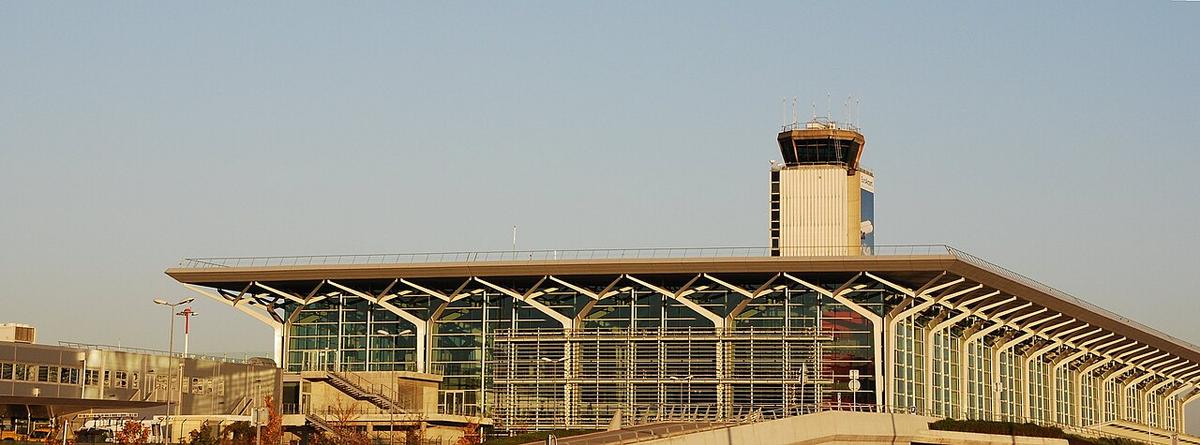
All of Germany's neighbours are in the EU except Switzerland. Around Lake Constance, near Basel and along the Upper Rhine, your phone can latch on to a Swiss network across the water or the border, and an EU plan may charge for it as roaming outside the EU. The German enclave of Büsingen, surrounded by Swiss territory, is the classic case. If you are staying near the border, pick a German network manually in your phone's settings. And if you fly into EuroAirport Basel-Mulhouse-Freiburg, remember that it is in France, next to Switzerland and Germany. More details in the Switzerland internet guide and the Lake Constance guide.
The Alps, the Black Forest and the countryside
Cities and motorways have good coverage, but in the Bavarian Alps, the Black Forest, the Harz and the Bavarian Forest there are valleys and forests without signal. Before a drive or a hike:
- Download offline maps and the full route.
- Tell someone your route and when you plan to be back.
- Check the DWD warnings: in winter, snow and ice close mountain roads.
- Carry a power bank: the cold drains batteries faster.
If you need mountain rescue, call 112: the control centre alerts the mountain rescue service (Bergwacht).
Money and health
- Cards and cash: cards and phone payments are accepted in almost all shops and restaurants, but some bakeries, small cafés, Christmas market stalls and beer halls still prefer cash. Carry some.
- European Health Insurance Card: it is valid in Germany for necessary care during your trip; it does not replace travel insurance. Travellers from outside the EU, the EEA and Switzerland pay for care unless their country has an agreement (the UK has the GHIC).
- Pharmacies on duty: outside normal hours there is always a pharmacy (Apotheke) on duty nearby; the address is posted on the door of any pharmacy.
How to get connected
- With an EU plan, Germany counts as home. A travel eSIM helps if your plan includes little data abroad or if your trip continues into Switzerland.
- A travel eSIM is installed at home with a QR code and, on most plans, starts counting when it first connects in Germany; each plan states before you pay when it starts. It uses Telekom, Vodafone or O2, depending on the plan, with 4G and 5G where available. It gives you data, not a German number: your usual number stays on your phone for texts and bank codes, and WhatsApp or FaceTime calls run over data. If you are combining Germany with Switzerland or other countries, a Europe plan that names them lets you use a single eSIM.
- A German prepaid SIM makes sense if you need a local number, but the law requires an identity check before it is activated, in the shop or by video call, and with some non-EU passports the check can take time.
- Wi-Fi in hotels, cafés and stations is a useful backup, but it does not come with you on the train, in the car or in the countryside.
What consular protection comes with the Germany eSIM?
Consular protection included: the country's risk level based on official travel advice from the US, UK, Germany and Spain; nearby embassies and consulates on a map; 16 emergency phrases with audio in 41 languages.
When should I activate my Germany eSIM?
Each plan shows before you pay when it starts counting. Plans that start on connection start counting the first time they connect to a network in one of the countries they cover: install the eSIM before you leave, keep the line off until you arrive in Germany, and you'll have data as soon as you land. Some also work in other countries (each plan lists which): if the line connects earlier, at home or on a layover, it starts counting there. Plans that start when you buy them are best bought on the day you'll start using them.
How do I install and activate the eSIM?
After you pay, you get an email with the QR code within minutes. Scan it while your phone is connected to the internet, from Settings → Mobile Data → Add eSIM. When you arrive, choose the eSIM as your data line and turn on data roaming for it.
Do I keep my own phone number?
Yes. The eSIM adds a data line for Germany while your usual SIM and number stay active for calls and texts.
Questions about internet in Germany
Does my EU plan work in Germany?
Yes. Germany is covered by Roam Like at Home: calls, texts and data at home prices, within your plan's limits. Only Swiss networks near the border can be charged separately.
What is the emergency number?
112, free of charge, for the fire service and ambulances, and 110 for the police. For an urgent medical question that is not an emergency, 116117, 24 hours a day.
Do I need a passport to go to Germany?
If you are an EU citizen, a valid ID card is enough, although Spain advises carrying your passport as well. There are checks at land borders, so keep your document to hand on trains and buses too.
Why do I lose signal on the train?
Tunnels, forests and rural stretches still have coverage gaps, and the train Wi-Fi depends on the same masts. Download your ticket and connections before boarding.
Why has my phone connected to a Swiss network?
Near Lake Constance, Basel or the Upper Rhine, your phone may choose the strongest network, even if it is Swiss. Switzerland is outside EU roaming: pick a German network manually.
Can I buy a SIM at the airport?
Yes, but you will have to verify your identity before it works. A travel eSIM is installed at home and works when you land, with no queues or checks.
Which networks does a Telcomia eSIM use in Germany?
Telekom, Vodafone or O2, depending on the plan, with 4G and 5G where available.
Do I need cash in Germany?
Cards work almost everywhere, but some bakeries, small cafés and Christmas market stalls still prefer cash.
Next destination
- Christmas Markets 2026 in Europe: Official Dates and Safety Tips
- Internet in Switzerland: eSIM, roaming and what your phone does on trains and mountains
- Basel Tri-Border Roaming: Switzerland, Germany and France
- Germany travel safety: what governments say today
- eSIM for Germany: prices and networks
- How to Avoid Roaming Charges in Europe
Photos
- The EuroAirport Basel-Mulhouse terminal, in October 2006. — Wladyslaw Disk, CC BY-SA 3.0
Ready to stay connected without surprises?
Activate your eSIM in seconds and travel connected in 200+ countries and territories.
See plansCompare Germany eSIM prices: Telcomia, Airalo, Saily and Holafly →