
For years, a phone from Spain, Germany or Italy worked in London just as it did at home. Since Brexit that depends on your operator: the United Kingdom left the EU's Roam Like at Home area in 2021, and some operators still include it while others charge by the day. On top of that, a national ID card is no longer enough to get in: you need a passport and an Electronic Travel Authorisation (ETA).
This guide starts with what matters if something goes wrong (who to call and where your consulate is) and then covers the practical side: what your phone does at the airport, on the London Underground, at the Irish border, in Jersey, Guernsey and the Isle of Man and in the Scottish Highlands, and how to stay online for the whole trip.
Consular protection: if something goes wrong
Is United Kingdom safe to visit right now?
The Telcomia Safety Index for United Kingdom is 1.33/4 (Low risk, level 1 of 4) as of Nov 22, 2026. It is a composite of official advisories from Spain, the United Kingdom, the United States and Germany, recalculated daily.
145 diplomatic missions from 127 countries, across 4 cities.
Situation now·
United Kingdom: London Underground walkouts from 26 November
The National Union of Rail, Maritime and Transport Workers (RMT) has called 24-hour walkouts by London Underground drivers, from 12:00 to 12:00: from 26 to 27 November, from 17 to 18 December and from 19 to 20 December 2026, with more dates in January and February 2027 (ITV, 6 November; Time Out, 13 November). During the walkouts there may be very little service on all Underground lines; the Elizabeth line, the Overground and the Docklands Light Railway are not part of the action (Time Out). London Underground is still negotiating, and the walkouts may still be called off. On 30 April 2026, the Joint Terrorism Analysis Centre raised the national threat level from 'substantial' to 'severe', which means an attack is highly likely, after a knife attack in Golders Green, north London (United Kingdom government). Between 2 and 5 November, dozens of flights in Europe, some leaving the United Kingdom, received bomb threats that proved false (Al Jazeera; AFP). Spain and Germany remind their citizens that they need a passport and an approved ETA before boarding.
What governments advise
The United States (8 September 2026) keeps the United Kingdom at Level 2 (exercise increased caution) because of the risk of terrorism, and notes that petty theft is common in tourist areas. Spain (6 May 2026) has no restrictions, warns of transport labour strikes and requires an Electronic Travel Authorisation (ETA). Germany (advice in force since 3 July 2026) has no special warnings and notes that the terrorism threat level has been 'severe' since 30 April 2026.
What to do
- 1If you are in London on 26 November or on 17 or 19 December, plan your trips without the Underground: use the Elizabeth line, the Overground, the Docklands Light Railway, buses or a taxi.
- 2Check the Underground status the day before and on the day on the Transport for London website or app.
- 3Watch your belongings and never leave your luggage unattended; tell staff if you see an abandoned item.
- 4Before you fly, get your ETA with the same passport you will travel with: without it you cannot board.
- 5For any emergency call 999 or 112.
- 6With a Telcomia eSIM for this trip, your embassy's details, the risk level and the emergency phrases with audio stay saved on your phone and open even without a connection.
Questions travellers are asking this week
Is it safe to travel to the United Kingdom right now?
Yes. The United States keeps it at Level 2 (exercise increased caution) because of terrorism, and Spain and Germany keep it at their lowest level. The national terrorism threat level has been 'severe' since 30 April 2026.
On which days is there a London Underground walkout?
24-hour walkouts by drivers, from 12:00 to 12:00, starting on 26 November, 17 December and 19 December 2026, with more dates in January and February 2027 (ITV; Time Out). They may be called off if there is a deal.
Do any trains run in London during the Underground walkout?
Yes. According to Time Out, the Elizabeth line, the Overground and the Docklands Light Railway are not part of the action. Expect more people on these trains and on buses.
What does the 'severe' threat level mean?
It means an attack is highly likely. The Joint Terrorism Analysis Centre set it on 30 April 2026. Stay alert in crowded places and follow police instructions.
How the Telcomia app helps
- Your embassy and its emergency numbers, one tap away.
- An alert if the risk level rises during your trip.
- Everything saved on your phone to read offline.
- Emergency phrases in the local language, with audio.
- Mobile data from the moment you land, so alerts reach you.
Sources: United States — Department of State (Nov 14, 2026) · Spain — Ministry of Foreign Affairs (MAEC) (Nov 14, 2026) · Germany — Federal Foreign Office (Auswärtiges Amt) (Nov 14, 2026) · gov.uk (Apr 30, 2026) · itv.com (Nov 6, 2026) · timeout.com (Nov 13, 2026) · aljazeera.com (Nov 4, 2026) · sbs.com.au (Nov 6, 2026)
A dated summary of official and press sources. It does not replace instructions from the local authorities or your embassy.
- Phone number (from a mobile): 999 and 112, both free, reach police, ambulance, fire and coastguard. 101 is the police for matters that are not urgent, and 111 is the public health service line for urgent problems that are not emergencies, 24 hours a day, in England, Scotland and Wales.
- If you cannot speak: you can text 999, but only if you have registered your phone first. You do it by texting "register" to 999 and following the instructions in the reply. The service is meant for deaf or speech-impaired people, and mountain services recommend it to walkers: a text gets through on a very weak signal.
- Your embassy: almost all are in London; many countries also have a consulate in Edinburgh and some in Manchester, Belfast or other cities. The Telcomia app shows you yours, with its address and phone number, and emergency phrases in English, with audio.
- If your country has no embassy or consulate in the United Kingdom and you are an EU citizen, the embassy of any other EU country must help you on the same terms as its own citizens (Article 23 of the Treaty on the Functioning of the EU).
- Lost or stolen passport: report it. In London, the Metropolitan Police accepts reports online at met.police.uk; keep the reference number, which your insurer and consulate will ask for. Your consulate can issue an emergency travel document. See which consulate serves you, according to your passport, in the United Kingdom safety guide.
- Official alerts: the British government sends emergency alerts to phones (gov.uk/alerts) with a loud sound, even if the phone is on silent. They reach compatible phones (iPhones on iOS 14.5 or later, Android 11 or later) in the area, but not if the phone is off, on wifi only or connected only to a 2G or 3G network; in aeroplane mode they may not arrive. Regional warnings for storms, snow and flooding are published by the Met Office at metoffice.gov.uk.
What governments say
Checked on 20 November 2026.
- The United States asks travellers to "exercise increased caution" in the United Kingdom (level 2 of 4) because of terrorism.
- Spain places no restrictions on travel. It points out that petty theft is common in tourist centres, especially in London (the Westminster district) and in Edinburgh.
- The United Kingdom, as the destination country, does not publish advice about itself. Its official terrorism threat level has been "severe" (an attack is highly likely), the fourth of five, since 30 April 2026.
Getting in: passport and ETA
- A valid passport for everyone, EU citizens included: national identity cards stopped being accepted for entry to the United Kingdom in 2021. Irish citizens are the exception.
- The ETA, the Electronic Travel Authorisation, is needed by citizens of the EU, the United States, Canada, Australia and most visa-free countries, children included. It has cost £20 since 8 April 2026, is valid for two years (or until your passport expires) for multiple entries and, since 25 February 2026, airlines, ferries and trains will not let you board without it.
- Also if you arrive overland from Ireland: there are no checks on the border with Northern Ireland, but you still need the ETA, except for Irish citizens and people legally resident in Ireland who carry proof of residence.
- Apply in good time: the British government advises applying at least three working days before you travel, and on your phone: the app asks you to scan your passport and take a photo of your face.
The essentials
The European Commission sums it up like this: Roam Like at Home applies in EU countries, in the European Economic Area countries (Iceland, Liechtenstein and Norway) and in Moldova and Ukraine, and not in other countries, although some operators extend their tariffs to some of them. The United Kingdom has not been on that list since 2021, so it depends on your operator.
In the United Kingdom it pays to have data from the moment you land. Your ETA is on your phone, the Tube and buses are paid by tapping your phone or card, train tickets are usually electronic and offline maps are the only thing that keeps you on track in the Highlands. And since the signal there can vanish for miles, it is worth having your connection ready before you leave home.
Does my plan work here?
- On an EU plan: the United Kingdom is outside Roam Like at Home, so each operator decides. Look for the United Kingdom by name in your plan's list of countries: "Europe" is not enough. If it is included, also check whether Jersey, Guernsey and the Isle of Man are, as they are separate.
- On a plan from the United States, Canada or elsewhere: there is no regulated roaming either. Check the price per day or per megabyte before you leave, not after your operator's first text.
- If your phone does not support 4G calling (VoLTE): British operators have switched off 3G and in 2025 O2 stopped accepting 2G and 3G roaming from many foreign lines. With some plans and older phones, that means you cannot make or receive calls on your usual number, even though data works. Ask your operator whether your line supports VoLTE in the United Kingdom.
- If you install a data eSIM, turn off data roaming on your usual line: that way your phone does not use your plan's data without you noticing, and you still receive calls and texts on your number (depending on your plan, receiving them outside the EU may cost money).
Where you are and what your phone does
| Where | What can happen | What to do |
|---|---|---|
| Airports (Heathrow, Gatwick, Manchester, Edinburgh) | As soon as your phone connects to a British network, your EU plan stops working as at home if your operator does not include the UK | Have your eSIM installed before you fly and switch it on when you land |
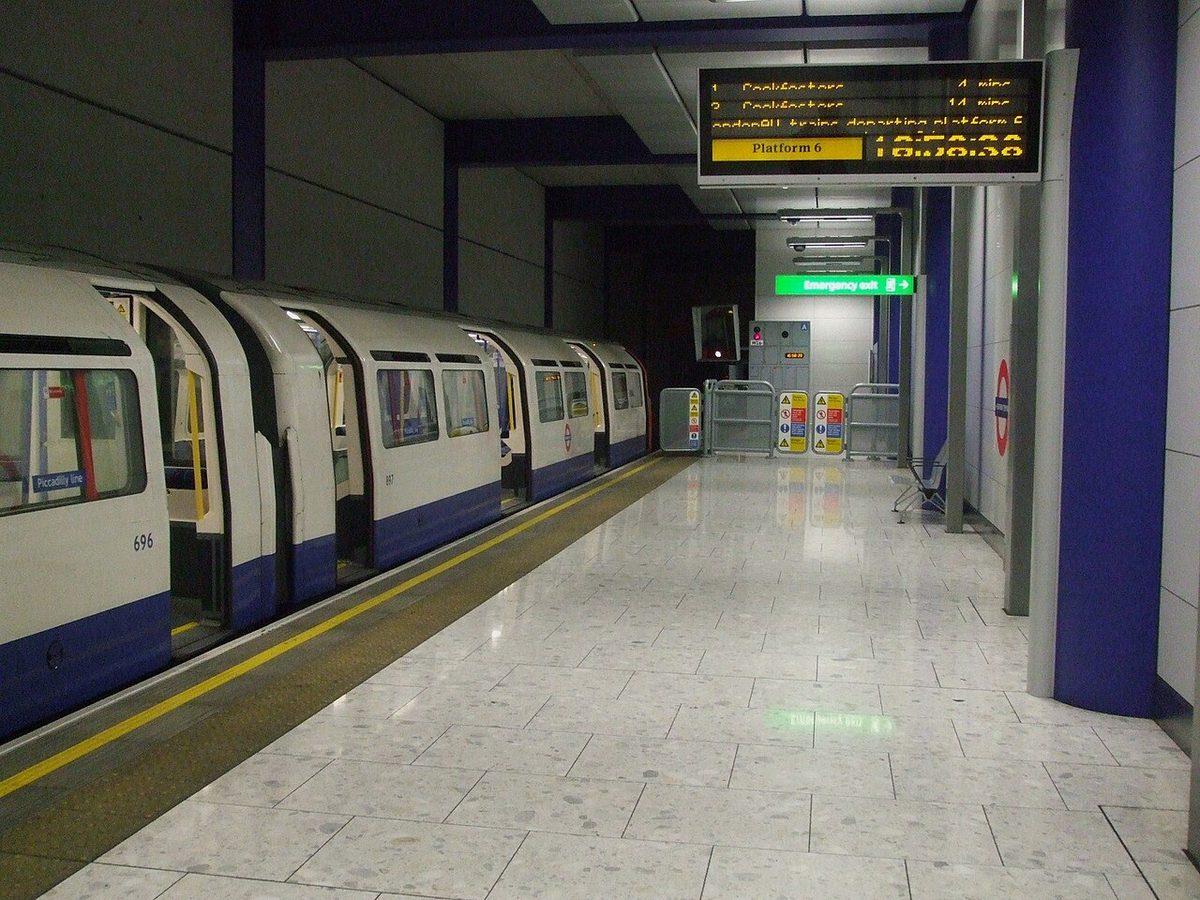
| London Underground | There is 4G and 5G coverage in many stations and tunnels, but not yet across the whole network; TfL expects to complete it at the end of 2026 | Download the map and route beforehand, and do not walk along the kerb looking at your phone |
| Northern Ireland, near the border | With no checks on the road, your phone can switch from a British to an Irish network without warning, or the other way round | On an EU plan, choose the network of the country you are in manually; on a UK plan, check whether it includes Ireland |
| Jersey, Guernsey and the Isle of Man | They are not part of the United Kingdom and have their own networks: a UK plan does not always cover them | Check that your plan names them before you take the ferry or the flight |
| Scottish Highlands and islands, Wales, the Lake District | Long stretches with weak or no signal, including on main roads | Offline maps, a power bank and the 999 text registration done before you set off |
| Ferry or Eurostar to France | As you reach the French coast your phone switches to a French network and, at sea, it may connect to the ship's network, which may run via satellite and be expensive | Turn off data roaming on your usual line during the crossing, or use aeroplane mode |
| Ferry to Ireland | The same happens with the ship's network on the Irish Sea | Same again: data roaming off or aeroplane mode until you reach port |
London: the Tube, paying by phone and petty theft
In London almost everything is contactless. On the Tube, buses and the city's trains you just tap your card or phone at the gate: there is no need to buy a ticket or an Oyster card, as long as you use the same card or the same phone all day so the daily cap applies. From Heathrow, the Elizabeth line reaches the centre in about 30 minutes, and the Piccadilly line is slower and cheaper. For what to see in the city in these months, read the guide to London at Christmas and in winter.
Northern Ireland and the Irish border
The border between Northern Ireland and Ireland has no checks, and near it your phone can switch from a British to an Irish network without you noticing. Ireland is inside the EU's Roam Like at Home and the United Kingdom is not, so what you pay depends on the network your phone connects to, not on where you are. If you are touring both sides, read the guide to Ireland and Northern Ireland and use a plan that includes both countries by name.
Jersey, Guernsey and the Isle of Man
The Channel Islands and the Isle of Man are Crown Dependencies, but they are not part of the United Kingdom or the EU, and they have their own operators. That is why neither the EU's Roam Like at Home nor many British plans cover them: the Guernsey regulator recommends checking your data roaming settings and considering a travel eSIM or SIM. If you go by ferry from France or the south coast of England, or by plane, check first that your plan names the island.
Scotland, Wales and the countryside
Edinburgh, Glasgow and Cardiff have good coverage, but the Scottish Highlands, the islands and parts of Wales and the Lake District have long stretches with weak or no signal. Before a road trip or a walk:
- Download offline maps and the full route.
- Register your phone for 999 texts: on the hills, a text gets through when a call cannot.
- Tell someone your route and what time you expect to be back.
- Check the Met Office warnings: in winter, snow and wind close mountain passes and cancel ferries to the islands.
If you need mountain or coastal rescue, call 999 or 112 and ask for the police (mountains) or the coastguard (coast).

Health
- 111 is the public health service line for urgent problems that are not emergencies, 24 hours a day, in England, Scotland and Wales. For an emergency, 999.
- European Health Insurance Card: Spain confirms that it can be used in the United Kingdom for necessary care during your trip; it does not replace travel insurance. Travellers from outside the EU pay for care, unless their country has an agreement.
How to get connected
- A travel eSIM is installed at home with a QR code and, on most plans, starts counting when it first connects in the United Kingdom; each plan states before you pay when it starts. It uses EE, O2, Three or Vodafone, depending on the plan, with 4G and 5G where available. It gives you data, not a British number: your usual number stays on your phone for texts and bank codes, and WhatsApp or FaceTime calls go over data. If you combine the United Kingdom with other European countries, a Europe plan that includes the United Kingdom by name leaves you with a single eSIM.
- A British prepaid SIM makes sense if you need a local number. They are sold in supermarkets, operators' shops and at some airports.
- Wifi in hotels, cafés and stations is a back-up, but it does not come with you on the train, in the car or in the countryside.
What consular protection comes with the United Kingdom eSIM?
Consular protection included: the country's risk level based on official travel advice from the US, UK, Germany and Spain; nearby embassies and consulates on a map; 16 emergency phrases with audio in 41 languages.
When should I activate my United Kingdom eSIM?
Each plan shows before you pay when it starts counting. Plans that start on connection start counting the first time they connect to a network in one of the countries they cover: install the eSIM before you leave, keep the line off until you arrive in United Kingdom, and you'll have data as soon as you land. Some also work in other countries (each plan lists which): if the line connects earlier, at home or on a layover, it starts counting there. Plans that start when you buy them are best bought on the day you'll start using them. Plans that start when you install them are best installed when you arrive.
How do I install and activate the eSIM?
After you pay, you get an email with the QR code within minutes. Scan it while your phone is connected to the internet, from Settings → Mobile Data → Add eSIM. When you arrive, choose the eSIM as your data line and turn on data roaming for it.
Do I keep my own phone number?
Yes. The eSIM adds a data line for United Kingdom while your usual SIM and number stay active for calls and texts.
Questions about the internet in the United Kingdom
Does my EU plan work in the United Kingdom?
Not as at home: since 2021 the EU's roaming regulation no longer reaches the United Kingdom. Some operators include it in their tariffs and others charge extra, so check your plan's list of countries before you leave.
Do I need an ETA to go to the United Kingdom?
Yes, if you are from the EU, the United States, Canada, Australia or another visa-free country and have no residence permit; Irish citizens do not. It costs £20, is valid for two years and you will not be allowed to board without it. And you need a passport: a national ID card is not enough.
What is the emergency number?
999 or 112, both free, for police, ambulance, fire and coastguard. For police matters that are not urgent, 101; for urgent medical questions that are not emergencies, 111 (in England, Scotland and Wales).
Is there coverage on the London Underground?
In many stations and tunnels, yes, with 4G and 5G, but not across the whole network yet; TfL expects to complete it at the end of 2026. Download your route beforehand.
Does a UK plan cover Jersey, Guernsey and the Isle of Man?
Not always: they are not part of the United Kingdom and have their own networks. Check that your plan names the island before you go.
Why can't I make calls on my number in the United Kingdom?
Your phone or plan may not support 4G calling (VoLTE) when roaming: the United Kingdom has switched off 3G. Ask your operator; in the meantime, WhatsApp or FaceTime calls work over data.
What happens to my phone near the Irish border?
It may connect to an Irish network without warning. On an EU plan that counts as Roam Like at Home; on a UK-only plan, it may not be included. Choose the network manually or use a plan that includes both countries.
Can I pay for the Tube with my phone?
Yes. Contactless cards and phones work at the gates on the Underground, buses and many trains. Always use the same one so the daily cap applies.
Next destination
Photos
Ready to stay connected without surprises?
Activate your eSIM in seconds and travel connected in 200+ countries and territories.
See plansCompare UK eSIM prices: Telcomia, Airalo, Saily and Holafly →