
With a plan from Spain, France or Germany, your phone works in Italy just as it does at home: that is the EU's Roam Like at Home. But Italy has its traps for travellers. Inside its territory there are two countries that are not in the EU, San Marino and the Vatican; in the north, around the lakes, your phone can switch to a Swiss network without warning; and on ferries, to the ship's network.
This guide starts with what matters if something goes wrong (who to call and where your consulate is) and moves on to the practical side: what your phone does at the airport, on the trains, in Rome, Venice and Naples, around the lakes, on ferries and in the Dolomites, and how to stay online for the whole trip.
Consular protection: if something goes wrong
Is Italy safe to visit right now?
The Telcomia Safety Index for Italy is 1.25/4 (Low risk, level 1 of 4) as of Nov 22, 2026. It is a composite of official advisories from Spain, the United Kingdom, the United States and Germany, recalculated daily.
114 diplomatic missions from 100 countries, across 6 cities.
Situation now·
Italy: ATP Finals in Turin (15–22 Nov) and transport strikes on 13–22 Nov
The Nitto ATP Finals are played from 15 to 22 November 2026 at the Inalpi Arena in Turin, according to the official website. In those weeks there are transport strikes, according to Italian media, and the dates may change. On 13 November Milan's city transport (ATM) stops. On 20 November there is a 24-hour general strike called by the CGIL; sources disagree on whether it includes trains, and the guaranteed minimum services are 06:00–09:00 and 18:00–21:00 on regional trains and 07:00–10:00 and 18:00–21:00 for departing flights. From 21:00 on 20 November until the evening of 21 November (20:00 or 21:00, depending on the source) there is also a national rail strike called by the SGB and CUB unions. On 21 November, from 13:00 to 17:00, air traffic control (ENAV) stops, and on 22 November there is a strike in the air traffic control at Milan Malpensa. We could not read the official strike calendar of the Italian Ministry of Transport, so check it there. The UK (3 November) reminds travellers that recent demonstrations in northern cities turned into riots and looting and that there is a greater police and military presence in Milan; strikes are often called at short notice. The US keeps Level 2 and Germany has no warning.
What governments advise
If you are going to the ATP Finals or travelling in Italy between 13 and 22 November, check the official strike calendar, book with a margin and avoid demonstrations.
What to do
- 1Check the Italian Ministry of Transport's official strike calendar before buying tickets and the day before you travel.
- 2If you travel on 20 or 21 November, have a plan B: trains and flights may be heavily affected.
- 3For the ATP Finals, book accommodation in Turin in advance and allow extra time to reach the Inalpi Arena.
- 4Avoid demonstrations in Milan and other northern cities and watch your belongings on trains and in tourist areas.
- 5With a Telcomia eSIM for this trip, your embassy's details, the risk level and the emergency phrases with audio stay saved on your phone and open even without a connection.
Questions travellers are asking this week
When are the 2026 ATP Finals in Turin?
From 15 to 22 November 2026 at the Inalpi Arena in Turin, according to the official Nitto ATP Finals website.
Are there train and flight strikes in Italy in November?
Yes, according to Italian media: a national rail strike from 21:00 on 20 November until the evening of 21 November, air traffic control (ENAV) on 21 November from 13:00 to 17:00 and Malpensa on the 22nd. Dates may change; confirm them in the official calendar.
Will the 20 November general strike stop the trains?
The CGIL has called it for 24 hours in the public and private sectors. Sources disagree on whether it includes trains, but a national rail strike starts that same day at 21:00.
Is it safe to travel to Italy right now?
Yes. The US keeps Italy at Level 2 because of terrorism and frequent petty crime in tourist areas and on trains, and Germany has no warning. The UK notes that recent demonstrations in the north turned into riots.
What minimum services run during the 20 November strike?
According to QuiFinanza, regional trains run from 06:00 to 09:00 and from 18:00 to 21:00, and departing flights from 07:00 to 10:00 and from 18:00 to 21:00. Each company publishes its own hours; confirm them with the company.
How the Telcomia app helps
- Your embassy and its emergency numbers, one tap away.
- An alert if the risk level rises during your trip.
- Everything saved on your phone to read offline.
- Emergency phrases in the local language, with audio.
- Mobile data from the moment you land, so alerts reach you.
Sources: United Kingdom — Foreign Office (FCDO) (Nov 3, 2026) · United States — Department of State (Sep 10, 2026) · Germany — Federal Foreign Office (Auswärtiges Amt) (Oct 23, 2026) · nittoatpfinals.com (Nov 6, 2026) · quifinanza.it (Nov 3, 2026) · sicurauto.it (Oct 21, 2026) · quifinanza.it (Oct 31, 2026)
A dated summary of official and press sources. It does not replace instructions from the local authorities or your embassy.
- Phone (from a mobile): 112, free of charge, works throughout Italy. The traditional numbers also still work: 113 (police), 115 (fire brigade) and 118 (ambulance and medical emergencies).
- If you cannot speak: Italy's official 112 app, 112 Where ARE U, lets you ask for help in writing and sends your location, but according to the UK it only works in some parts of Italy. If you want it, install it before your trip and check whether it covers the region you are visiting.
- Your embassy: embassies are in Rome, and many countries also have a consulate in Milan, Naples or other large cities. The Telcomia app shows you yours, with its address and phone number, and emergency phrases in Italian, with audio.
- Lost or stolen passport or ID card: report it to the Carabinieri or the Polizia di Stato and keep the report, as your insurer and your consulate will ask for it. The police report alone will not let you leave Italy: you need a new document or an emergency travel document from your consulate. See which consulate serves you, based on your passport, in the Italy safety guide.
- Official alerts: IT-alert, the Civil Protection alert system, sends messages to every switched-on phone in a danger zone, with nothing to install; it is used, for example, for volcanic activity at Vesuvius or the Campi Flegrei. Warnings about earthquakes, volcanoes and bad weather are on protezionecivile.gov.it.
What governments say
Checked on 21 November 2026.
- The United States asks travellers to "exercise increased caution" in Italy (level 2 of 4) due to terrorism, and warns that petty crime is common in tourist areas and on public transport, including trains.
- The United Kingdom warns that recent demonstrations in northern cities have led to riots and looting, and that there are more police and military personnel in Milan. It advises staying away from any demonstration.
- Spain sets no restrictions on travel. It warns of the risk of earthquakes, especially in Umbria, Lazio, Marche, Abruzzo and Campania, of pickpockets in crowds and of pedestrians being hit by vehicles.
- Germany has no travel warning for Italy. It warns of thefts on the train from Fiumicino airport to Rome, in Milan's Piazza del Duomo, at Venice's vaporetto stops and on the buses between the centre and the station in Naples.
Entering: documents and checks
- EU citizens: a valid national ID card or passport is enough. Spain advises carrying both and keeping them apart: if one is stolen, you still have the other.
- Always carry photo ID: the Italian police can ask for identification at any time, and hotels and ferries ask for a document for every traveller, children included. Spain warns that Italy is carrying out document checks on people arriving from Spain by air or by sea.
- Non-EU travellers: Schengen rules apply. Since October 2025 (at every border since April 2026), the Entry/Exit System (EES) takes fingerprints and a photo on your first entry and replaces passport stamps. As of 21 November 2026, the ETIAS travel authorisation is not running yet: the EU will give several months' notice.
- Cash: if you enter or leave Italy with more than 10,000 euros, you must declare it.
The essentials
The European Commission sums it up like this: Roam Like at Home applies in EU countries, in the European Economic Area (Iceland, Liechtenstein and Norway) and in Moldova and Ukraine. Italy is included, so with an EU plan you call, text and use data at home prices, within your plan's fair-use limits. San Marino, the Vatican and Switzerland are not on that list.
In Italy it pays to have data from the moment you land. Trenitalia and Italo tickets live in their apps, which alert you to platform changes, delays and strikes; many museums require a timed ticket; and maps get you out of the historic centres, where streets do not always go where they seem to.
Will my plan work here?
- With an EU plan: yes, at home prices. Just check how much data your plan includes when roaming: some plans with lots of data at home have a lower limit abroad. And watch out for San Marino, Swiss networks near the lakes and the ships' networks, which are not included.
- With a UK plan: since Brexit, EU roaming depends on your operator; some include it and others charge by the day.
- With a plan from the United States, Canada or elsewhere: there is no regulated roaming. Check the price per day or per megabyte before you leave, not after your operator's first text.
- If your phone is old: Italian operators have been switching off 3G. If your phone or your plan does not support 4G calling (VoLTE) when roaming, data may work while calls do not. Ask your operator.
- If you install a data eSIM, turn off data roaming on your usual line: that way your phone does not use your plan's data without you noticing, and you still receive calls and texts on your number.
Where you are and what your phone does
| Where | What can happen | What to do |
|---|---|---|
| Airports (Rome Fiumicino, Milan Malpensa, Venice, Naples) | With a non-EU plan, roaming charges start as soon as your phone connects to an Italian network | Install the eSIM before you fly and switch it on when you land |
| Bologna-Florence high-speed train | The line runs almost entirely through tunnels; they have had 4G coverage since 2022, but there can be short drops and the train Wi-Fi can be slow | Download your ticket and anything else you need before boarding |
| San Marino | It is a separate country, outside the EU: if your phone connects to a San Marino network, an EU plan can charge it as non-EU roaming | Before the day trip from Rimini, check your plan or pick an Italian network manually |
| Lakes Como and Maggiore, Campione d'Italia and the Alpine valleys | Your phone can connect to a Swiss network across the lake or the mountain, and Switzerland is outside EU roaming | With an EU plan, pick an Italian network manually; with an Italy plan, check whether it includes Switzerland |
| Ferries to Sardinia, Sicily, Greece or Albania | At sea your phone can connect to the ship's network, which may run via satellite and be expensive | Turn off data roaming on your usual line during the crossing, or use airplane mode |
| Dolomites and Alps | There are coverage gaps in the valleys and on mountain passes, and near the border your phone can switch to an Austrian network (within EU roaming) or a Swiss one (outside it) | Offline maps and a power bank; in the mountains, 112 |
| Countryside and inland Sardinia, Sicily and the south | In rural areas and on some stretches of the coastal paths, such as those of the Cinque Terre, the signal can disappear | Save offline maps and your accommodation's address before you set off |
Trains: Trenitalia and Italo
High-speed trains (Trenitalia's Frecciarossa and Italo) link Turin, Milan, Venice, Bologna, Florence, Rome and Naples, and their apps sell tickets, store them on your phone and alert you to changes. They have on-board Wi-Fi, but it reaches the train through the same masts as your phone: where there is no coverage, it drops just the same. Before boarding:
- Download your ticket in the app or save it as a PDF: you have to show it at the ticket check even without signal.
- Validate your regional ticket: regional train tickets bought from a machine or a kiosk must be validated before boarding, in the machines on the platform; bus tickets, in the machine on board. Without validation, the fine is on the spot. On high-speed trains, with a seat and a set time, there is no need.
- Check for strikes: Italy has frequent transport strikes, regional or national, often announced at short notice. The Ministry of Infrastructure and Transport publishes the calendar.
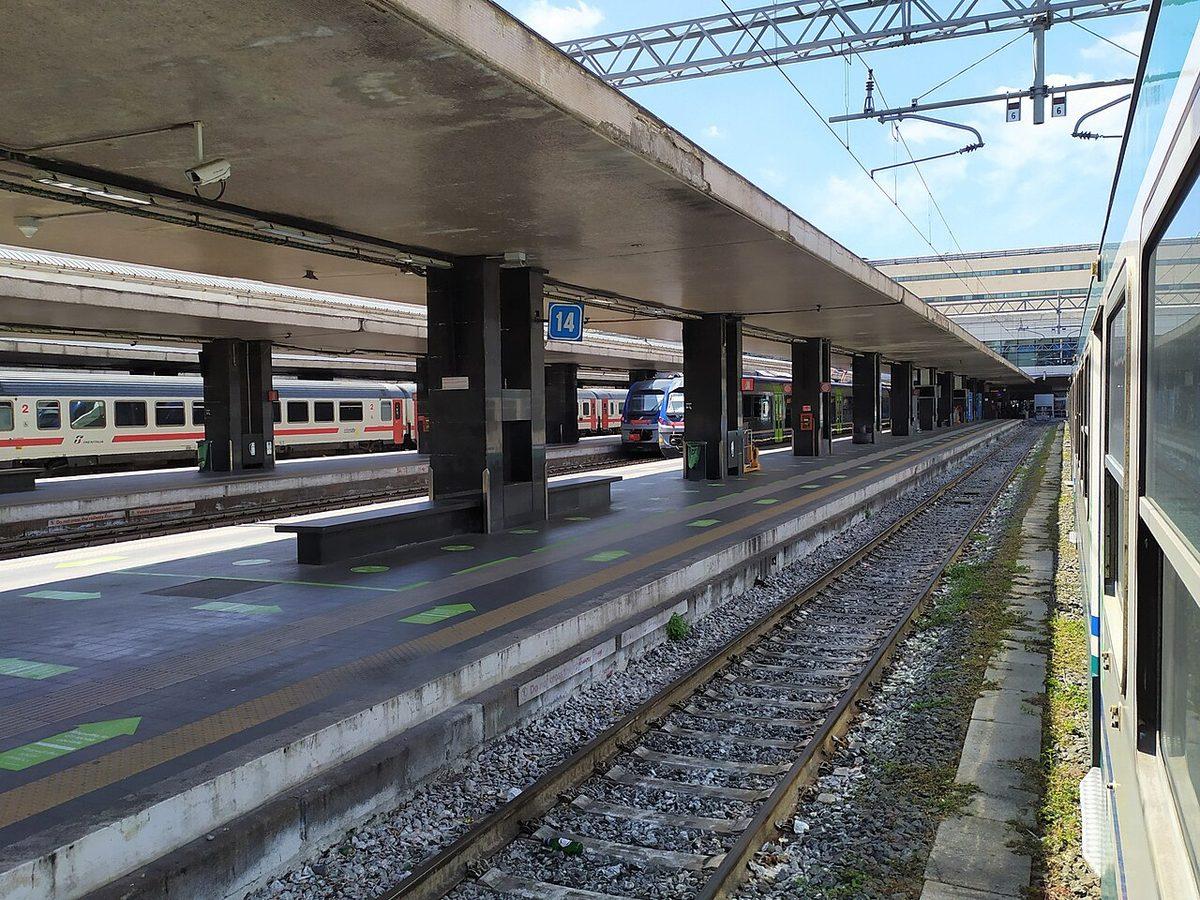
Rome, Florence, Venice and Naples
The big cities have good 4G and 5G coverage. What surprises visitors are their rules and their thefts:
- Rome: from Fiumicino, the train goes to Termini; from the airports of Rome, Milan and Naples, official taxis have a fixed fare into the city. Only use licensed taxis, from the rank or from an app. At Termini station and on buses, keep your phone and wallet in an inside pocket. At Christmas, see the Rome at Christmas and in winter guide.
- Venice: on some days of the year, visitors who do not stay overnight pay an access fee; hotel guests are exempt but must register. Check the city council's official website before you go to see whether it applies to you. During "acqua alta", some squares and streets flood, and the city gives warnings with sirens and on its website.
- Naples: Vesuvius and the Campi Flegrei are monitored by Civil Protection; if there is volcanic activity, IT-alert sends a warning to phones in the area. Watch out for thieves on scooters and on the buses from the centre to the station.
- Rules that bring fines: in Rome, Florence and other cities it is forbidden to bathe in or climb into fountains, and in some, to sit on monument steps or eat next to them; in Venice, to swim in the canals. It is also illegal to buy from unlicensed street sellers and to take sand, shells or pebbles from the beach.
- The centre by car: many historic centres are limited traffic zones (ZTL) watched by cameras, and the fine reaches your home. Check your route before driving into a city centre.
- Tourist tax: many cities charge a nightly tax that you pay at the hotel, often in cash. Ask for a receipt.
San Marino, the Vatican and the Swiss border
Inside Italy there are two countries that are not in the EU. The Vatican uses Italian networks, so in St Peter's and the Vatican Museums your phone carries on as in Italy; more details in the Vatican City internet guide. San Marino has its own network and is outside EU roaming: see the San Marino internet guide before the day trip from Rimini.
In the north, on Lake Como, Lake Maggiore and in the valleys near Lugano, your phone can latch onto a Swiss network across the water or the mountain, and an EU plan can charge it as non-EU roaming. Campione d'Italia, an Italian village surrounded by Swiss territory, is the typical case. If you are staying near the border, pick an Italian network manually in your phone settings. More details in the guide to Lugano and Lake Como and in the Switzerland internet guide.
Islands and ferries
Sicily, Sardinia and the islands of the Bay of Naples have good coverage in the towns and along the coast, with gaps inland. On a ferry, while the coast is in sight, your phone uses the masts on land; at sea it can connect to the ship's own network, which charges separately and is not covered by EU roaming. Ferries leave Bari, Ancona or Brindisi for Greece, Croatia and Albania; Bari also has ferries to Montenegro (Bar); Genoa has ferries to Tunisia and Morocco, and Civitavecchia to Tunisia: Greece and Croatia are within EU roaming, and Albania, Montenegro, Tunisia and Morocco are not. More details in the Greece internet guide and in the Albania guide.
In Sicily, eruptions of Etna sometimes force Catania airport to close or flights to be diverted: if you are flying from there, check the airport's website and contact your airline. On Capri, single-use plastic is banned, with fines of up to 500 euros.
The Dolomites, the Alps and the mountains
Cities and motorways have good coverage, but in the Dolomites, the Alpine valleys and the Apennines there are stretches without signal. Before a drive or a hike:
- Download offline maps and the full route.
- Tell someone your route and when you expect to be back.
- Check avalanche and weather warnings: in winter, snow closes mountain passes.
- Carry a power bank: the cold drains it faster.
If you are going skiing: a certified helmet is compulsory for under-18s and strongly recommended for everyone, and third-party liability insurance is compulsory (you can buy it with your ski pass). Off-piste, the law requires you to carry an avalanche transceiver, a probe and a shovel. Brown bears live in Trentino: follow the signs and the province's warnings. If you need rescue, call 112.
Money and health
- Card and cash: cards and mobile payments are accepted almost everywhere. When paying by card, keep it in sight. Carry some cash for the tourist tax, small cafés and villages.
- European Health Insurance Card: it is valid in Italy for necessary care during your trip, with the same co-payments as Italians; it does not replace travel insurance. Travellers from outside the EU, the EEA and Switzerland pay for care unless their country has an agreement (the UK has the GHIC).
- Pharmacies: they are marked with a green cross, and outside opening hours there is always one on duty ("farmacia di turno"); the address is posted on the door of any pharmacy.
- Drugs: possession, including of cannabis, is severely punished, and trafficking carries sentences of up to 20 years.
How to get connected
- With an EU plan, Italy counts as home. A travel eSIM helps if your plan includes little data abroad or if your trip continues to Switzerland, San Marino or a country outside the EU.
- A travel eSIM is installed at home with a QR code and, on most plans, starts counting when it first connects in Italy; each plan says before you pay when it starts. It uses TIM, WindTre, Vodafone or Iliad, depending on the plan, with 4G and, on some plans, 5G. It gives you data, not an Italian number: your usual number stays on your phone for texts and bank codes, and WhatsApp or FaceTime calls go over data. If you are combining Italy with Switzerland or other countries, a Europe plan that lists them by name leaves you with a single eSIM.
- An Italian prepaid SIM makes sense if you need a local number, but to activate it you need your passport or ID card and an Italian tax code (codice fiscale), which operators' shops usually generate for visitors.
- Wi-Fi in hotels, cafés and stations is a backup, but it does not come with you on the train, in the car or on the ferry.
What consular protection comes with the Italy eSIM?
Consular protection included: the country's risk level based on official travel advice from the US, UK, Germany and Spain; nearby embassies and consulates on a map; 16 emergency phrases with audio in 41 languages.
When should I activate my Italy eSIM?
Each plan shows before you pay when it starts counting. Plans that start on connection start counting the first time they connect to a network in one of the countries they cover: install the eSIM before you leave, keep the line off until you arrive in Italy, and you'll have data as soon as you land. Some also work in other countries (each plan lists which): if the line connects earlier, at home or on a layover, it starts counting there. Plans that start when you buy them are best bought on the day you'll start using them.
How do I install and activate the eSIM?
After you pay, you get an email with the QR code within minutes. Scan it while your phone is connected to the internet, from Settings → Mobile Data → Add eSIM. When you arrive, choose the eSIM as your data line and turn on data roaming for it.
Do I keep my own phone number?
Yes. The eSIM adds a data line for Italy while your usual SIM and number stay active for calls and texts.
Questions about internet in Italy
Does my EU plan work in Italy?
Yes. Italy is covered by Roam Like at Home: calls, texts and data at home prices, within your plan's limits. What usually gets charged separately is San Marino networks, Swiss networks near the border and ships' networks.
What is the emergency number?
112, free of charge, throughout Italy. 113 (police), 115 (fire brigade) and 118 (ambulance) also work.
Do I need a passport to go to Italy?
If you are from the EU, a valid national ID card is enough, although Spain advises carrying your passport too. Always carry photo ID: the police can ask for it, and hotels and ferries ask every traveller for it.
Is there signal on the train to Florence?
The high-speed line between Bologna and Florence runs almost entirely through tunnels. They have had 4G coverage since 2022, but there can be short drops and the train Wi-Fi can be slow. Download your ticket before boarding.
Why has my phone connected to a Swiss network?
Near Lakes Como and Maggiore or Lugano, your phone may pick the network with the strongest signal, even if it is Swiss. Switzerland is outside EU roaming: pick an Italian network manually.
Does my phone work in San Marino and the Vatican?
In the Vatican, yes, just as in Italy, because it uses Italian networks. San Marino is outside EU roaming: check your plan before you go or pick an Italian network manually.
Which networks does a Telcomia eSIM use in Italy?
TIM, WindTre, Vodafone or Iliad, depending on the plan, with 4G and, on some plans, 5G.
Will my phone work on the ferry?
While the coast is in sight, it uses the masts on land. At sea it can connect to the ship's network, which charges separately: turn off data roaming or use airplane mode.
Next destination
- Rome at Christmas and in winter 2026-2027: what to do, dates and safety
- Internet in Vatican City: St Peter's and the Vatican Museums
- Internet in San Marino: Mount Titano, the three towers and Rimini
- Lugano and Lake Como: roaming between Switzerland and Italy
- Internet in Switzerland: eSIM, roaming and what your phone does on trains and in the mountains
- Safety in Italy: what governments say today
- eSIM for Italy: prices and networks
- How to avoid roaming charges in Europe
Photos
Ready to stay connected without surprises?
Activate your eSIM in seconds and travel connected in 200+ countries and territories.
See plansCompare Italy eSIM prices: Telcomia, Airalo, Saily and Holafly →